


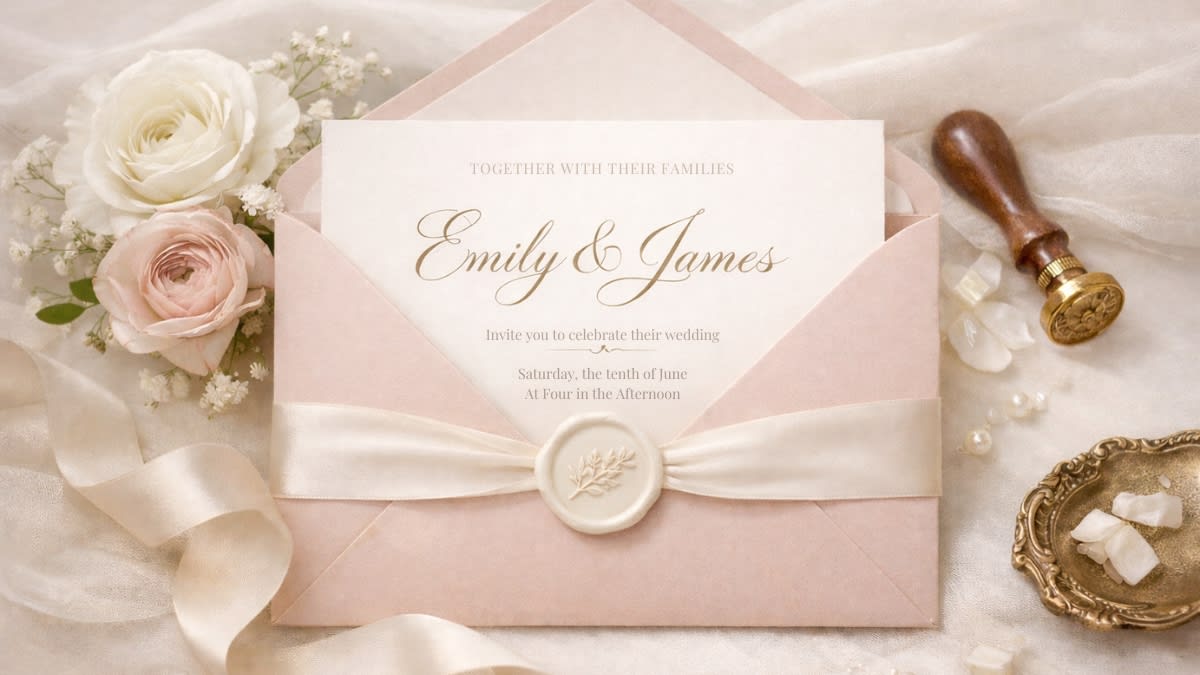
Planning your wedding invitations can feel overwhelming, especially when you’re trying to figure out exactly what information needs to go on the main invitation card. If you're unsure what details to include on wedding invitations, this complete checklist will guide you through the essentials, optional additions, and common etiquette mistakes to avoid.
Whether you're going traditional or modern, this guide ensures your invitations look beautiful and include everything your guests need to know.
The Essential Details Every Wedding Invitation Must Include
Your main invitation card should clearly communicate the core information about your wedding day.
1. The Opening Invitation Line (Host + Couple’s Names)
The first part of your invitation includes both who is hosting and who is getting married. These elements work together and set the tone for the entire invitation.
Do you need full names?
Traditionally, formal invitations included full names. However, most modern couples now use first names only, especially for relaxed or contemporary weddings. Choose the level of formality that matches your day.
Here are three common formats:
Host: Parents of the Bride (Traditional)
Mr. and Mrs. John Smith
request the pleasure of your company
at the wedding of their daughter
Samantha Emily Smith
to
Michael James Thomas
Host: Both Families (Modern Traditional)
Together with their families
Samantha and Michael
Host: Bride and Groom (Self-Hosted)
Samantha
and
Michael
Tip: The host line introduces the invitation, while the couple’s names remain the visual focal point. Full names feel more formal; first names feel modern and relaxed. There’s no strict rule, choose the wording that feels most like you as a couple.
2. The Request Line
This is the formal wording that invites guests to attend the ceremony. Common examples are:
- “Request the pleasure of your company” (for a church ceremony)
- “Request the honour of your presence”
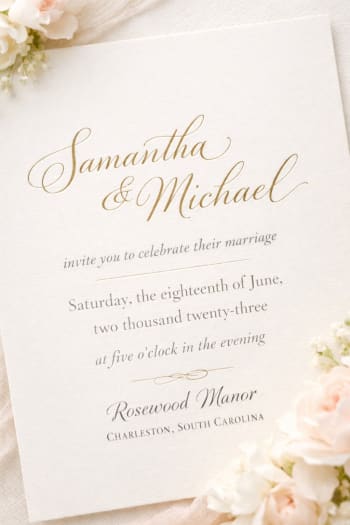
- “Invite you to celebrate their marriage”
3. Date and Time
Traditionally written in full:
Saturday, the twentieth of June
Two thousand and twenty-six
At half past two in the afternoon
Modern versions can use numerals:
Saturday 21 June 2026
at 2:30pm
4. Ceremony Venue
Include the venue name, town/city, and county.
Example:
St Mary’s Church
Henley-on-Thames
Oxfordshire
5. Reception Details
- If reception is at the same venue: “Reception to follow”
- If at a different location: You can include the venue and address
Optional Details You Can Include on the Main Invitation
These are not mandatory but increasingly common:
- Dress code (Black tie, Lounge suits, etc.)
- Unplugged ceremony request
- Wedding website (if minimal info)
However, avoid overcrowding the main card. Extra information is usually better placed on a separate details card. For a full breakdown of what inserts to include, read our guide on What to Put With Wedding Invitations.
What NOT to put on the main invitation
Avoid adding the following to keep your invitation elegant and uncluttered.
- Gift list information
- Detailed directions
- Accommodation details
- Long paragraphs of instructions
- Adults-only note (if needed, word it politely on a separate card to be considerate of all guests)
Presentation Matters: Why Packaging Is Just as Important as Wording
Once your wording is perfect, presentation makes the first impression. Luxury envelopes, wax seals, vellum wraps, and elegant finishing touches instantly elevate even the simplest invitation design.
At Wedding Envelopes, we offer:
- Luxury wedding envelopes in a wide range of sizes and finishes
- Lined Envelopes for added elegance
- Blank wedding cards for your personal messages
- Textured wedding envelopes for a premium feel
Quick Wedding Invitation Checklist
Use this handy checklist to make sure nothing gets forgotten:
- The Opening Invitation Line
- Request line
- Date
- Time
- Ceremony venue
- Reception information
When your invitation is beautifully worded and perfectly packaged, it sets the tone for your entire wedding.